Who it's for
The agency that treats client data like its own.
On Monday morning, the team starts the kickoff in EU Meet, the briefing workshop runs on EU Board, and booking time to the client project starts with a single click. On Friday, the managing director sees which project is on budget, without an export, without a pivot table.
1 instead of 6
DPAs for customers from regulated industries
0
manual steps between time tracking and billing
EU
Server location for all client project data
The daily reality today
What hurts right now.
Agencies process client data every day: briefings, market research, unpublished campaign material. For every client whose data ends up with a US service, a data processing agreement under Art. 28 GDPR is needed, which the client has to sign and in which the US provider appears as a subprocessor. That puts off clients from regulated industries. Time tracking on projects often runs in separate tools that aren't connected to task management, and reconciling them costs time that could be billable.
The products
What you need from it.

 EUBoard
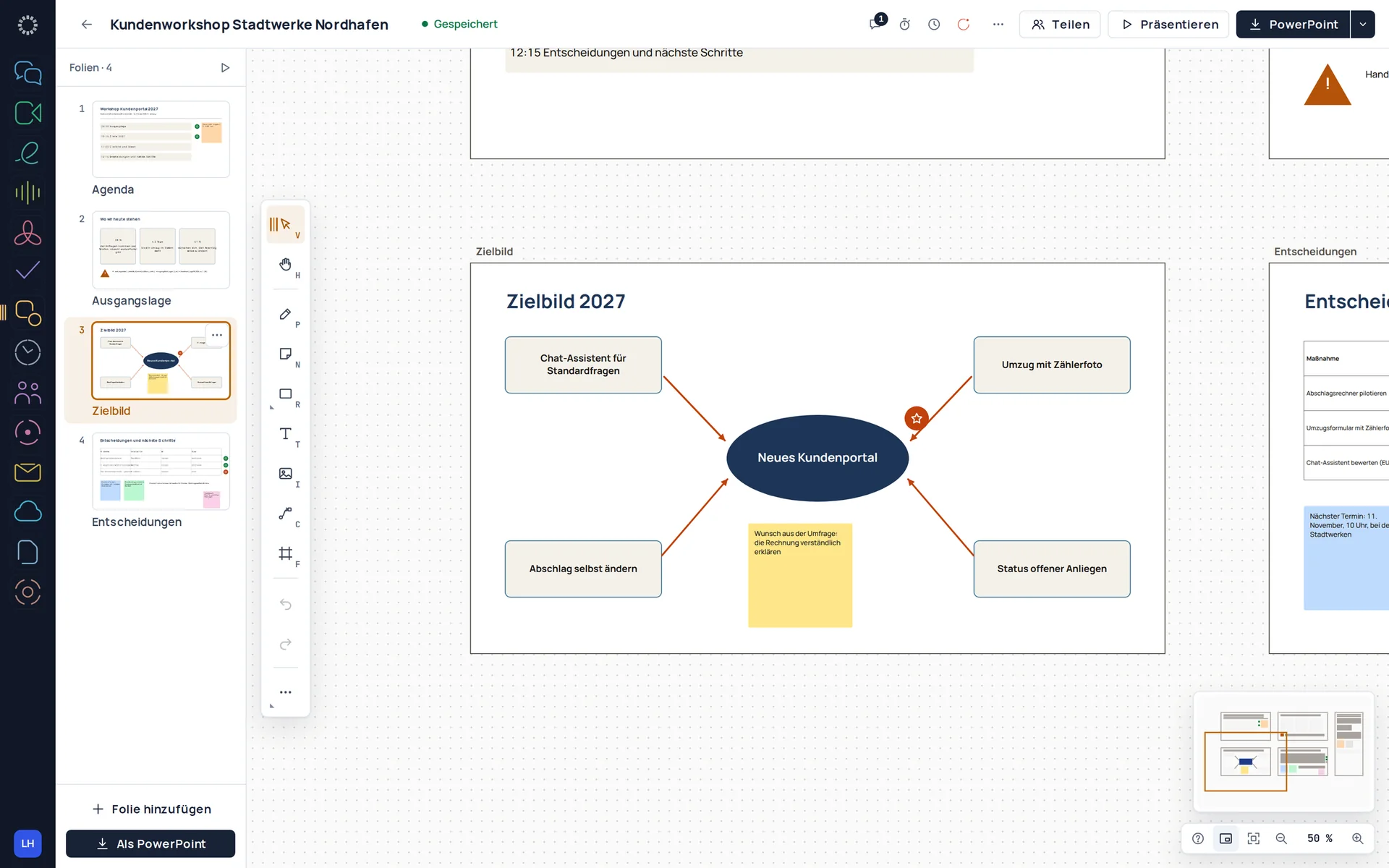
Workshops with clients on the infinite canvas. Presentations are created in the same space where the ideas were developed, with no switch between media.

 EUFlow
Projects and campaigns with milestones, capacity planning and clear ownership, visible to the internal team and optionally to the client.

 EUTrack
Time tracking goes straight to the project, exportable into agency billing, no tool in between, no manual matching.

 EUMeet
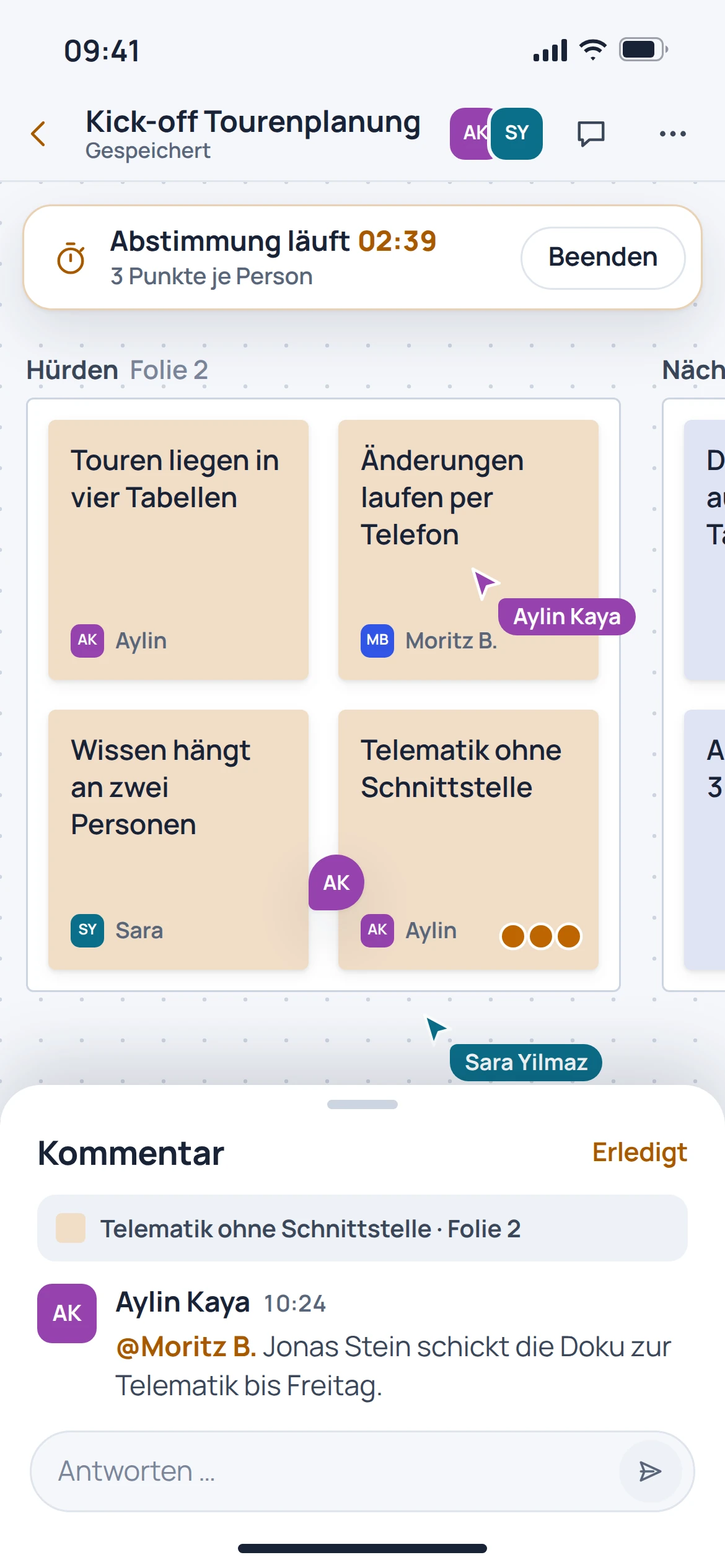
Client calls and internal alignment without a separate video platform: the link goes out, the client clicks, the call begins.

 EUNotes
Briefings, concepts and decision notes in one place, with access control per project and version history.

 EURecap
Client calls are recorded in minutes and filed as decision evidence in the project documentation, with no manual follow-up.
In practice
Four workflows from your day.
- 01
Strategy workshop with the client
The client joins EU Board via a link, no account, no app. The team works together on the canvas: clustering, prioritising, first concept sketches. At the end of the workshop, the project lead exports the relevant frames as a presentation directly from EU Board. EU Recap produces the minutes from the audio running in parallel.
- 02
Billing a campaign
At the end of the month, the agency director opens EU Track and filters by client. All hours are broken down by employee and activity, and unstarted tasks from EU Flow are marked as non-billable. The export goes straight to the accounting software as a CSV.
- 03
Onboarding a freelancer
An external copywriter is brought in for two weeks. They get access only to the EU Notes area and the EU Flow project of the client they're working for, and nothing else. Once the assignment ends, their access is revoked; the time tracking stays in the system.
- 04
Data processing for the client
A new client from the healthcare sector asks for the DPA for the tools in use. The agency sends a single DPA with EU Suite as the processor, and names all subprocessors with their country, including those in the USA. The conversation about data protection is over in five minutes instead of two weeks.
Legal position
Legal framework for agencies
- Agencies typically process client data on their behalf and thereby become processors themselves under Art. 28 GDPR; every service used becomes a subprocessor that must be named in the DPA.
- Following the 2019 ECJ ruling, the Working Hours Act requires employers to record working time in full. EU Track meets this obligation for permanent employees.
- Copyright in work product (§ 43 UrhG) belongs to the employer when the works are created in fulfilment of the employment contract; this also applies to AI-assisted output, as long as the AI is used as a tool and the creative contribution remains with the person.
- Client data in US services requires standard contractual clauses and a transfer impact assessment under Art. 46 GDPR. At EU Suite, this does not apply to product data: it is stored in Germany, and transcription and AI run at Mistral AI in France.
- When agencies work with personal data belonging to their clients' end customers (e.g. CRM data for campaigns), the client's instructions apply. EU Suite supports granular access rights and deletion concepts.
Other industries